

Words by Jamie Jansen

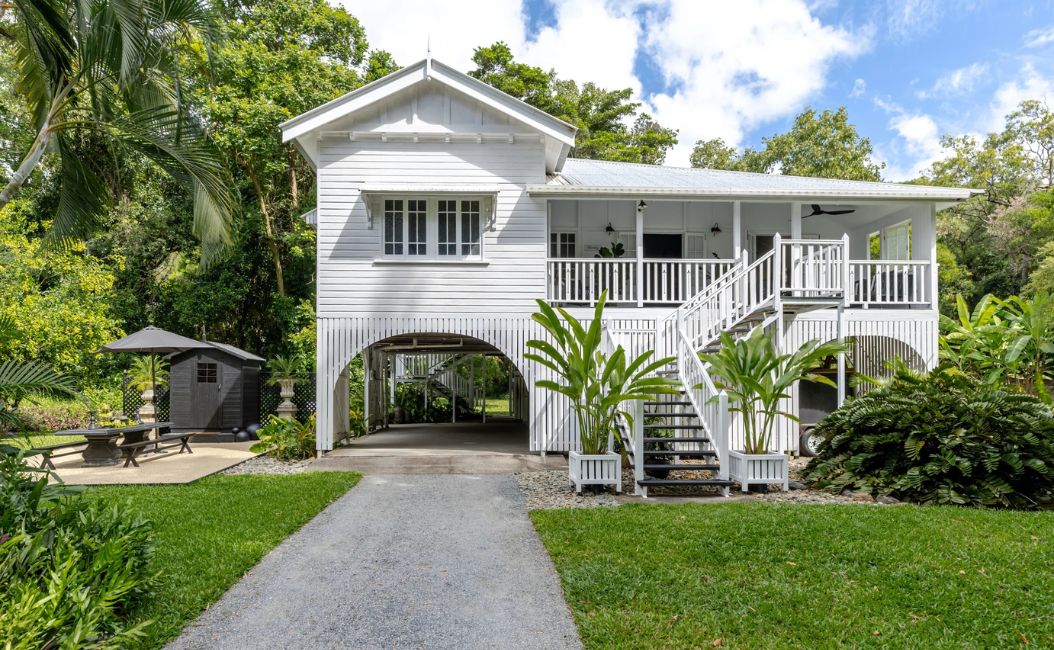
There’s something undeniably charming about a Queenslander home. Standing tall on timber stumps, dressed in crisp white weatherboards, often with a mango tree leaning in, they rise gracefully, airy and elegant, perfectly suited to the north’s climate and character. More than homes, they are living pieces of heritage, and we’re lucky to have a few in our tropical backyard.

The Queenslanders we admire today are the result of decades of adaptation. To understand why, we need to start at the very bottom.

From the ground up

The first homes now recognised as Queenslanders appeared in the 1840s in Brisbane and the Darling Downs. While the style has evolved, raised floors, wide verandahs, and high ceilings remain familiar across Queensland and northern New South Wales. 

Queenslanders are a classic example of vernacular architecture; design shaped by local climate, materials, and everyday needs. In these homes, practicality and beauty go hand in hand.

Timber was abundant, cheap, and easy to work with, making it the natural choice for early homes. Initially simple, rough-hewn shacks, they gradually improved as sawmills chamfered boards to fit more tightly, creating stronger, more storm-resistant cladding.

Raising the bar (literally)

Raising a house on 2.8-metre stumps was both practical and clever, simplifying construction on Brisbane’s hilly terrain and avoiding costly earthworks. The elevated design also made it easier to inspect and maintain termite-prone timber, while keeping stormwater from running straight into the house.

The elevation created a shaded, naturally breezy undercroft. Long before air-conditioning, it kept the Queenslander cool and doubled as a lively playground where children could escape the heat and stay dry, a vital part of the Queenslander’s heart.

A home built for heat and rain

By the 1880s, Queenslanders were further perfected for the tropics. 

Open verandahs wrapped around even modest cottages, providing shade, shelter from rain, and a pathway for cooling breezes through French doors. Breezeways above internal doors ensured air circulated, keeping the Queenslander as cool as a cucumber.

Queensland isn’t just hot, it’s wet, too. The steeply pitched roof was designed to shed water quickly, and corrugated iron became the material of choice: lightweight, durable, storm-resistant, and easy to replace if damaged.

Rise and fall of the Queenslander

Interestingly, the biggest building boom came after World War I, as returning soldiers started families, with thousands of Queenslanders built through the 1920s and 1930s. 

After WWII, Queenslanders went through a bit of a makeover. Material shortages and the push for affordable, low-maintenance homes saw verandahs trimmed, timber replaced with fibreboard, and the stump advantage on steep blocks became less important as leveling sites got easier.

But, nearly 180 years later, Queenslanders are back in style. Restored, updated, and carefully preserved, they celebrate the very principles that made them brilliant: natural ventilation, smart shading, sustainable materials, and design shaped by climate rather than fashion.

Queenslanders in Douglas

One shining example is Kirrilly, a beautifully restored Queenslander in the Mowbray Valley, just 10 minutes from Port Douglas.

Sold at the end of 2025 by Ray White Port Douglas following an extensive renovation, it shows what happens when craftsmanship and care come together.

The house was relocated from the historical town of Atherton about 150 kilometres inland, to its new life in Mowbray.

Lovingly revived, it features high ceilings that draw in the breeze, warm polished timber floors, and wide verandahs that catch the changing light. Every detail has been cared for, creating a calm, elegant home with unmistakable Queenslander charm.

Keeping the stories alive

The team at Ray White Port Douglas believes the history and stories of these homes are worth preserving, and they are honoured to be part of their journey as custodians.

Lee Tartaglia, Sales and Marketing Agent at Ray White Port Douglas, who oversaw the sale of Kirrilly, has a deep appreciation for heritage, shaped by his upbringing in England. 

For him and the team, Queenslanders carry history in every beam and floorboard. “We feel privileged to guide these homes into their next chapter and keep their stories alive for generations to come,” Lee says.

Living in a Queenslander is an experience like no other, a chance to enjoy the tropical Queensland life at its best, where every breeze, every shaft of sunlight, and every creaking timber tells a story. And for those dreaming of calling one home, the Port Douglas team at Ray White knows just how to make that dream a reality.

raywhiteportdouglas.com.au