


Page 86 - Port Douglas Magazine 47
P. 86
Turtle Rehab


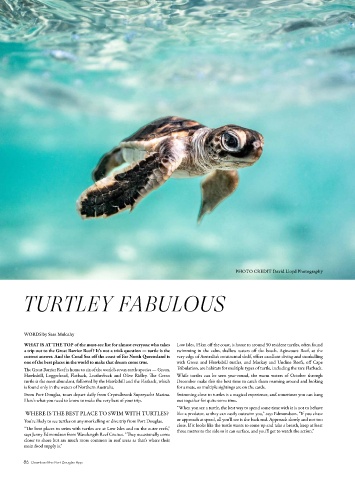
                                                                                    PHOTO CREDIT David Lloyd Photography


         TURTLEY FABULOUS


          WORDS by Sara Mulcahy
          WHAT IS AT THE TOP of the must-see list for almost everyone who takes   Low Isles, 15km off the coast, is home to around 50 resident turtles, often found
          a trip out to the Great Barrier Reef ? It’s not a trick question — turtle is the   swimming in the calm, shallow waters off the beach. Agincourt Reef,  at the
          correct answer. And the Coral Sea off the coast of Far North Queensland is   very edge of Australia’s continental shelf, offers excellent diving and snorkelling
          one of the best places in the world to make that dream come true.   with Green and Hawksbill turtles, and Mackay and Undine Reefs, off Cape
          The Great Barrier Reef is home to six of the world’s seven turtle species — Green,   Tribulation, are habitats for multiple types of turtle, including the rare Flatback.
          Hawksbill, Loggerhead, Flatback, Leatherback and Olive Ridley. The Green   While turtles can be seen year-round, the warm waters of October through
          turtle is the most abundant, followed by the Hawksbill and the Flatback, which   December make this the best time to catch them roaming around and looking
          is found only in the waters of Northern Australia.   for a mate, so multiple sightings are on the cards.
          From Port Douglas, tours depart daily from Crystalbrook Superyacht Marina.   Swimming close to turtles is a magical experience, and sometimes you can hang
          Here’s what you need to know to make the very best of your trip.  out together for quite some time.
                                                               “When you see a turtle, the best way to spend some time with it is not to behave
           WHERE IS THE BEST PLACE TO SWIM WITH TURTLES?       like a predator, as they can easily outswim you,” says Edmondson. “If you chase
          You’re likely to see turtles on any snorkelling or dive trip from Port Douglas.   or approach at speed, all you’ll see is the back end. Approach slowly and not too
          “The best places to swim with turtles are at Low Isles and on the outer reefs,”   close. If it looks like the turtle wants to come up and take a breath, keep at least
                                                               three metres to the side so it can surface, and you’ll get to watch the action.”
          says Jenny Edmondson from Wavelength Reef Cruises. “They occasionally come
          closer to shore but are much more common in reef areas as that’s where their
          main food supply is.”


         86  Download the Port Douglas App

